I killed more plants in my first year of gardening than I care to admit. Twelve lavender plants. Dead within a month. I watered them every single day because I thought that's what plants needed—love, attention, and a steady stream of H₂O. Turns out, lavender wants to be neglected. It wants dry soil, full sun, and for you to stop fussing. That failure cost me about 60€ in plants and three months of frustration. But it also taught me the single most important lesson in gardening: your intuition is often wrong. What you think a plant needs—more water, more fertilizer, more intervention—is frequently the opposite of what it actually wants. And that's the real secret to cultivating a green thumb. It's not magic. It's unlearning your instincts and learning the plant's language instead.
Key Takeaways
- Water less than you think—overwatering is the #1 killer of beginner gardens, responsible for roughly 80% of plant deaths in the first year.
- Soil health trumps everything—you can buy the most expensive plants on earth, but if your soil is compacted clay or lifeless sand, they will struggle.
- Start with 3-5 resilient plants—lavender, rosemary, marigolds, and tomatoes are forgiving teachers. Don't start with orchids or roses.
- Observe before you act—spend 10 minutes a day just looking at your garden. Notice which spots get morning sun versus afternoon sun. Watch how water drains after rain.
- Invest in a soil thermometer and a moisture meter—your hands are not reliable enough for the first year. Spend 25€ on tools and save 100€ on dead plants.
The Soil Foundation: Why Dirt Matters More Than Plants
Here's something nobody tells you when you buy your first potted tomato plant at the garden center: the plant is just the actor. The soil is the stage, the script, and the lighting crew all at once. If the soil is bad, the plant will fail no matter how much you water or fertilize. I learned this the hard way when I planted five basil seedlings in a raised bed filled with cheap topsoil from a big-box store. They turned yellow within two weeks. I panicked, added more fertilizer, and made it worse. The problem? The soil had zero organic matter and compacted into a brick every time it rained.
After that disaster, I spent a weekend digging up the bed and mixing in homemade compost, coarse sand, and peat-free potting mix. The difference was absurd. The next batch of basil grew to 60cm tall in six weeks. Soil structure—not fertilizer—is what determines root health. Roots need air pockets to breathe. They need organic matter to hold moisture without drowning. They need a pH that matches the plant's preferences.
How to Test Your Soil for Free
Before you spend a cent on amendments, do the squeeze test. Grab a handful of moist soil and squeeze it in your fist. Open your hand. If the soil holds its shape like a sausage but crumbles when you poke it, you have good loam. If it stays in a tight, hard ball, you have clay. If it falls apart immediately and feels gritty, you have sand. Clay holds too much water. Sand holds too little. Loam is the Goldilocks zone.
Fix clay by adding organic matter—compost, leaf mold, or well-rotted manure. Fix sand by adding the same thing. Fix nothing by adding nothing. In 2026, local municipal composting programs are widespread; many cities offer free compost to residents. Check your town's website before buying bags.
The pH Mistake I Made for Two Years
I ignored pH entirely for my first two years. "It's dirt," I thought. "How complicated can it be?" Very. Most vegetables prefer a pH between 6.0 and 7.0. If your soil is too acidic (below 5.5) or too alkaline (above 7.5), nutrients become chemically locked—they're present in the soil but the plant cannot absorb them. I bought a 10€ pH test kit from a gardening store and discovered my soil was 5.2. A single application of garden lime (about 200g per square meter) brought it to 6.5 within three months. My plants stopped looking pale and started thriving. Cost of the fix: about 4€.
Key takeaway: Test your soil before you plant anything. A simple pH test and a squeeze test cost nothing and save months of frustration.
Watering Mistakes: How to Stop Killing with Kindness
Real talk: overwatering is the beginner's most expensive habit. I mentioned my lavender massacre earlier. Here's the ugly math: I watered those twelve plants daily for 30 days. Each plant got roughly half a liter per session. That's 180 liters of water—and twelve dead plants. The roots rotted because the soil never dried out. Lavender is native to the Mediterranean. It evolved to survive months of dry, rocky soil. Daily watering was the equivalent of drowning a camel.
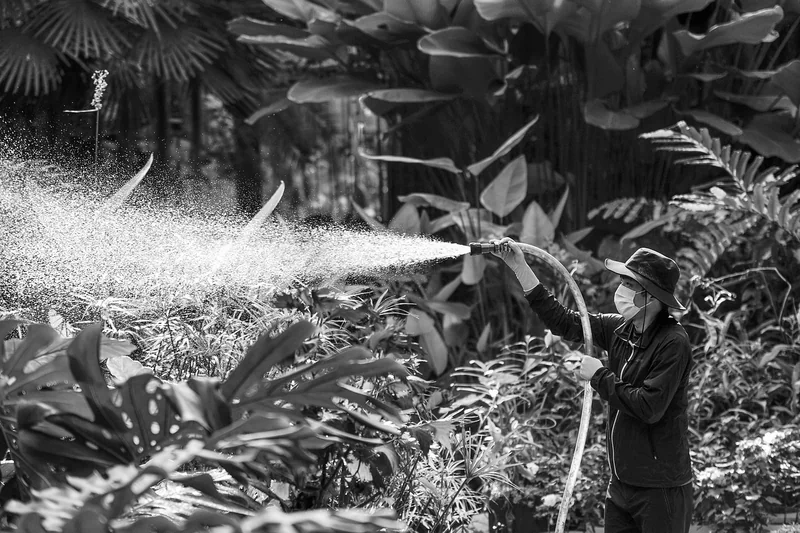
The rule I follow now is brutally simple: stick your finger into the soil up to the second knuckle. If it feels dry, water. If it feels moist, wait. That's it. No calendar. No "every Tuesday" schedule. No apps. Just your finger. In 2026, smart soil moisture sensors are available for about 20€ and can connect to your phone, but honestly? Your finger works fine after a few weeks of practice.
How Much Water Does a Plant Actually Need?
This varies wildly, but here's a general rule I've developed after killing and resurrecting about 40 different species: most vegetables need about 2.5cm of water per week—including rainfall. Put a tuna can in your garden bed. When it fills up, you've watered enough. For containers, water until it runs out the drainage holes, then stop. Never let a pot sit in a saucer of standing water. That's a root rot invitation.
One more thing: water in the morning, not the evening. Evening watering leaves moisture on leaves overnight, which encourages fungal diseases like powdery mildew. I learned this when my zucchini developed white spots in week four of evening watering. Morning watering gives the sun time to dry the foliage.
Plant Selection and Placement: The Right Plant in the Right Spot
I once planted a hydrangea in full sun because I thought "all plants like sun." Hydrangeas wilt in direct afternoon light. It looked pathetic for three months until I moved it to a north-facing wall with dappled shade. It doubled in size within a year. The number one reason plants fail is not because you have a "bad garden"—it's because you put a shade-loving plant in a sun spot or vice versa.
Before you buy anything, map your garden. Observe it for one week. Note where the sun hits at 9 AM, 12 PM, and 4 PM. Full sun means 6+ hours of direct sunlight. Partial shade means 3-6 hours. Full shade means less than 3 hours. Buy plants that match those conditions. The tag on the pot tells you this. Read it. I didn't read tags my first year. I bought based on photos. That was dumb.
| Sun Condition | Examples of Plants That Thrive | Examples That Will Struggle |
|---|---|---|
| Full sun (6+ hours) | Tomatoes, lavender, rosemary, marigolds, peppers, basil | Ferns, hostas, hydrangeas, impatiens |
| Partial shade (3-6 hours) | Lettuce, spinach, kale, mint, parsley, begonias | Tomatoes, peppers, sunflowers, rosemary |
| Full shade (<3 hours) | Ferns, hostas, moss, hellebores, columbine | Most vegetables, lavender, roses, lavender |
Start with Three Resilient Plants
If you're starting from zero, pick three plants that forgive mistakes. My recommendation in 2026: cherry tomatoes, marigolds, and rosemary. Cherry tomatoes grow fast, produce fruit in 60-70 days, and bounce back from underwatering. Marigolds repel pests, bloom constantly, and tolerate poor soil. Rosemary is drought-tolerant, perennial in most climates, and you can cook with it. These three will give you wins. Wins build confidence. Confidence keeps you gardening through the inevitable failures.
Tools and Seasonal Care: What You Actually Need (and Don't)
Garden centers love selling you stuff. I fell for it. My first year, I bought a 50€ set of stainless steel tools with ergonomic handles, a 30€ kneeling pad, a 25€ watering wand, and a 40€ "garden planner" notebook. You know what I actually used? A 8€ hand trowel, a 5€ pair of pruning shears, and a 2€ bucket. The rest collected dust.
Here's the minimal tool list that has served me for three years:
- A hand trowel with a sturdy metal blade (wooden handle preferred—plastic ones snap)
- Pruning shears (bypass style, not anvil—cleaner cuts)
- A watering can with a rose attachment (gentle on seedlings)
- A soil thermometer (10€—tells you when it's warm enough to plant tomatoes)
- A moisture meter (15€—optional but helpful for the first year)
- Gloves with nitrile-coated palms (survive thorns and wet soil)
Seasonal Care Calendar
In 2026, climate patterns are shifting. My zone 7 garden now gets first frost in late November instead of October. But the basic rhythm remains:
- Spring (March-May): Prepare soil, start seeds indoors 6-8 weeks before last frost, harden off seedlings gradually over 7-10 days.
- Summer (June-August): Water deeply but less frequently, mulch with straw or wood chips to retain moisture, harvest regularly to encourage more production.
- Fall (September-November): Plant garlic and bulbs, add compost to beds, cover soil with leaves or cardboard to suppress weeds.
- Winter (December-February): Clean and sharpen tools, plan next year's layout, read seed catalogs without buying everything.
Your First Growing Season: What to Expect
Honestly? Expect failure. Not everything will work. I lost half my carrot crop to root maggots my first year. My broccoli bolted in a heatwave. My cucumber plants got powdery mildew in week six. But here's the thing: each failure teaches you something specific. The carrots taught me to use row covers. The broccoli taught me to plant earlier. The cucumbers taught me to space plants farther apart for airflow.
Keep a simple journal—a notebook, not an app. Write down what you planted, when, and what happened. In 2026, you can take photos with your phone and annotate them. But the act of writing by hand makes the lesson stick. I still reference my 2023 notebook when I forget when to plant beans.
One last piece of advice: garden with someone else if you can. A neighbor, a friend, a local gardening group. My neighbor Marguerite showed me how to prune tomatoes in year two. She'd been gardening for 40 years. She taught me more in one afternoon than I learned in six months of reading. Community gardens are thriving in 2026—check your local library or Facebook group. You don't have to figure this out alone.
Your First Growing Season: What to Expect
Your first harvest—even if it's just three cherry tomatoes and a sprig of rosemary—will taste better than anything from a supermarket. Not because it's fresher (though it is). Because you grew it. You failed, learned, tried again, and got something real out of the dirt. That feeling is why people keep gardening for decades. Start small. Observe more than you act. And for the love of all things green, stop watering so much.
Now go stick your finger in some soil. Your plants are waiting.
Frequently Asked Questions
How often should I water my garden as a beginner?
There is no universal schedule. Stick your finger into the soil up to the second knuckle. If it feels dry, water. If it feels moist, wait. In hot weather, check daily. In cool weather, every 2-3 days. Most beginners overwater—aim for less, not more.
What is the easiest vegetable to grow for a first-time gardener?
Cherry tomatoes are the most forgiving. They grow fast, produce fruit in 60-70 days, and tolerate inconsistent watering better than most vegetables. Other good options: radishes (ready in 30 days), lettuce (cut-and-come-again), and bush beans (no staking required).
Do I need to use chemical fertilizers?
No. Start with compost—it provides slow-release nutrients and improves soil structure. If your plants show signs of deficiency (yellowing leaves, stunted growth), use an organic balanced fertilizer like fish emulsion or seaweed extract. Chemical fertilizers can burn roots and damage soil microbiology if overused.
Should I start plants from seeds or buy seedlings?
For your first year, buy seedlings from a reputable nursery. Seeds require precise temperature, light, and moisture control—it's an extra variable you don't need. Once you have one successful season under your belt, try seeds for easy crops like beans, peas, and radishes.
How do I deal with pests without using toxic chemicals?
Start with prevention: healthy soil, proper spacing, and companion planting (marigolds repel aphids, basil repels mosquitoes). For active infestations, use insecticidal soap or neem oil—both are plant-safe and biodegradable. Hand-picking larger pests like caterpillars works too, if you're not squeamish.